
From Play to Persistence: How Experience and Encouragement Build STEM Success
Published on 05/28/2026
|
SKU #
100018
Interest isn’t something kids simply ‘find’—it’s something they build through repeated exposure and the right support
The Myth of the “Math Brain”
By high school, some kids seem naturally inclined toward STEM, while others feel they “just aren’t math people.” Research shows that this gap is often created by the different messages and tools kids receive.
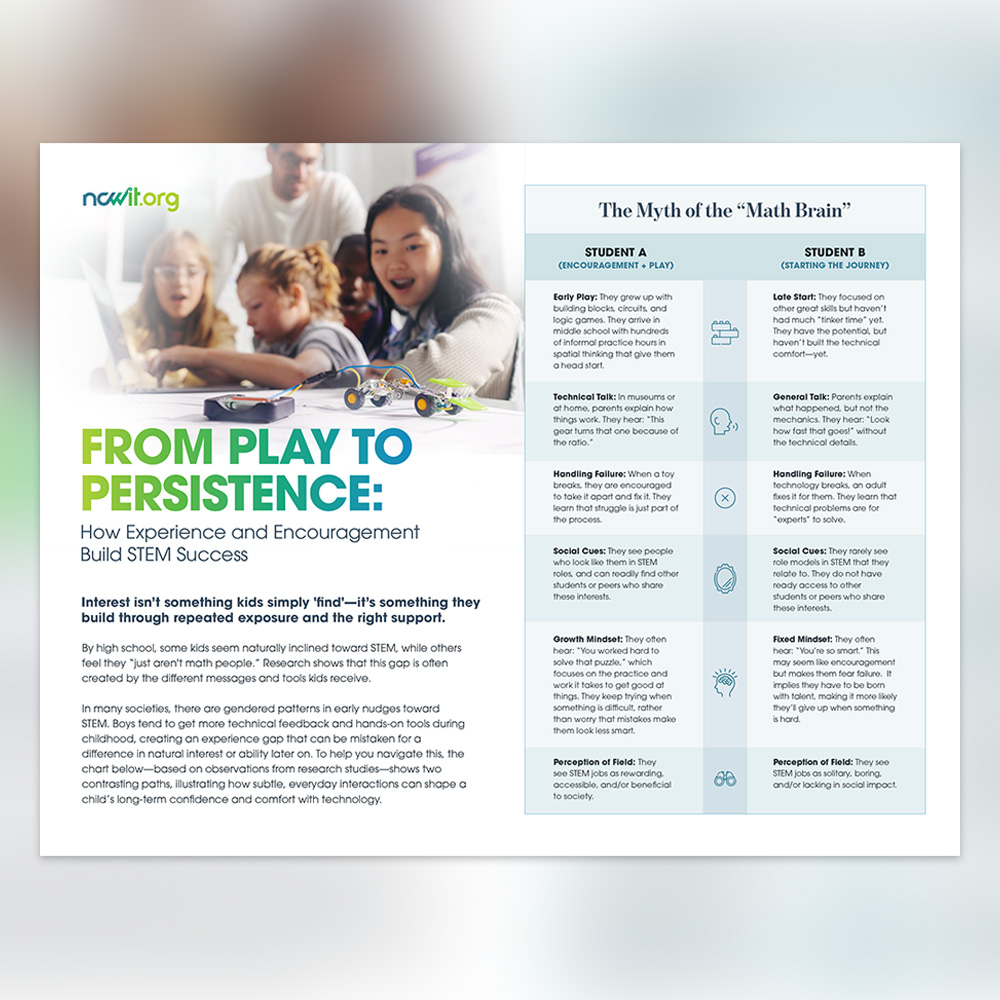
In many societies, there are gendered patterns in early nudges toward STEM. Boys tend to get more technical feedback and hands-on tools during childhood, creating an experience gap that can be mistaken for a difference in natural interest or ability later on. To help you navigate this, the chart below—based on observations from research studies—shows two contrasting paths, illustrating how subtle, everyday interactions can shape a child’s long-term confidence and comfort with technology.
| Student A (Encouragement + Play) | Student B (Starting the Journey) |
| Early Play: They grew up with building blocks, circuits, and logic games. They arrive in middle school with hundreds of informal practice hours in spatial thinking that give them a head start. | Late Start: They focused on other great skills but haven’t had much “tinker time” yet. They have the potential, but haven’t built the technical comfort—yet. |
| Technical Talk: In museums or at home, parents explain how things work. They hear: “This gear turns that one because of the ratio.” | General Talk: Parents explain what happened, but not the mechanics. They hear: “Look how fast that goes!” without the technical details. |
| Handling Failure: When a toy breaks, they are encouraged to take it apart and fix it. They learn that struggle is just part of the process. | Handling Failure: When technology breaks, an adult fixes it for them. They learn that technical problems are for “experts” to solve. |
| Social Cues: They see people who look like
them in STEM roles, and can readily find other students or peers who share these interests Growth Mindset: They often hear: “You worked hard to solve that puzzle,” which focuses on the practice and work it takes to get good at things. They keep trying when something is difficult, rather than worry that mistakes make them look less smart. |
Social Cues: They rarely see role models in STEM that they relate to. They do not have ready access to other students or peers who share these interests. Fixed Mindset: They often hear: “You’re so smart.” This may seem like encouragement but makes them fear failure. It implies they have to be born with talent, making it more likely they’ll give up when something is hard. |
| Perception of Field: They see STEM jobs as rewarding, accessible, and/or beneficial to society. | Perception of Field: They see STEM jobs as solitary, boring, and/or lacking in social impact. |
It is never too late to change a child’s path. Because the brain is still growing and changing, middle school is a good time to close the encouragement gap.
The goal isn’t to turn every child into a computer scientist, but to ensure no child closes the door on their own potential because they mistake a lack of experience for a lack of talent. Providing hands-on experience now ensures that if they do walk away from STEM later, it’s because they found a different passion, not because they felt they didn’t have what it takes.
- Student A (The Experience Path): Arrives at a computing or math class and feels at home. Because they’ve seen these tools before, they succeed quickly. Teachers and peers may label them as ”naturally gifted,” not realized they are highly practiced.
- Student B (Starting the Journey): Arrives at the same class and may feel like a “trespasser” or imposter. But with the right encouragement, they catch up quickly. Once they get a few small wins under their belt, their confidence—and interest—will take off.
Talent is a Built Attribute
Research shows that Student A isn’t necessarily smarter; they just have more “mastery experiences.”
As a parent, you can create these experiences. By providing chances to tinker, explaining how things work, and showing that STEM is a collaborative way to help the world, you give your child the “permission” and the tools they need to stay in the game.
Check out our related resource, Top 10 Ways to Encourage Your Child’s Interest in STEM and visit Ncwit.org/resources for a deeper dive into the research basis for this resource.