
A sense of community and belonging within the campus helps students persist and contributes to their emotional wellbeing. Commuter students have unique needs that can be overlooked by typical campus programming; for example, time constraints and lack of a “home base” can lead to isolation. To promote a sense of belonging for commuter students, institutions should implement a multi-faceted approach combining dedicated physical spaces, tailored programming, and strong peer support networks.
Supporting Commuter Student Success
Below are ten ways to ensure commuter students feel valued and integrated into your campus culture.
-
Host a commuter student orientation.
Offer comprehensive orientation sessions specifically for commuter students to familiarize them with campus resources, services, and support systems. For example, provide details on how to navigate parking or public transportation, where the comfortable study spaces are on campus, or where they can find affordable dining and coffee spots.
-
Provide additional commuter-specific programming throughout the year, such as workshops and skill sessions.
Departments could offer a bag lunchwith advisors or faculty members, a commuter appreciation week, or a commuter connection series. For example, programs could offer a lunch or subsidized coffee/snack breaks during common commuting hours, where students can socialize and connect with on-campus resources and each other. Drop-in events between classes might also work well, making it easier for students with tight commuting schedules to participate. Invite representatives from other areas on campus (e.g., advisors, tutors, career services) to attend events and informally connect with students.
-
Ensure students have access to and are aware of campus resources.
This includes financial aid, academic support, transportation solutions, library services, and mental health support. Use strategic communication campaigns (e.g., newsletters, social media) to keep commuters informed about events, deadlines, and available resources, ensuring they do not miss out on opportunities due to limited time on campus.
-
Proactively engage commuter students.
Program staff and faculty should reach out to students with information on clubs, events, study groups, or to check in after a missed class or appointment.
-
Provide flexible opportunities for students to get involved in program activities.
Design co-curricular activities and events that can accommodate students with off-campus responsibilities. Provide a variety of involvement opportunities that take into account time constraints, such as evening and weekend events, hybrid meetings/events, and virtual participation options for clubs and organizations. Consider hosting family-centered events, as many commuters may live at home with family or have children.
-
Develop commuter-friendly spaces.
Establish and promote on-campus spaces specifically for commuter students, including lounges and study areas equipped with amenities like charging stations, secure lockers, computers, and food prep areas (e.g., microwaves, fridges). This provides them with a “home base” on campus and a place to connect with other commuters. If a space is unavailable, organize study times or reserve study areas in the library to facilitate connections.
-
Foster in-person and digital communities.
Establish online discussion boards and student groups for commuter students to connect with peers and share information with each other. Connect incoming commuter students with experienced commuter peer mentors or assistants who can offer guidance, support, and practical advice on navigating campus life and challenges.
-
Increase and facilitate collaboration in courses.
Use technology to facilitate peer-to-peer connections and collaborations in both online and in-person settings. Encourage faculty to use inclusive and engaging teaching practices, facilitate in-class peer interactions (e.g., small group discussions, group projects), and provide flexible office hours to build connections.
-
Provide resources and context to faculty and staff about commuter student needs.
While faculty and staff can provide a lot of support to online students, they may be unaware of commuter student needs. Create a repository of quick tips and resources they can pull from, or provide them with important context at faculty and staff meetings.
-
Collect feedback and data on commuter student experiences in your program.
Conduct regular surveys, focus groups, or interviews to measure their sense of belonging and use the feedback to improve program policies and support systems.
Learn More: NCWIT’s Undergraduate System Model
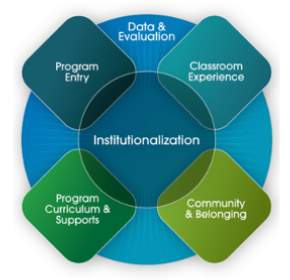
This resource aligns with several pillars of the NCWIT Undergraduate System Model, which helps programs and departments broaden participation and increase student persistence in computing and engineering. By implementing these tips, you are addressing:
-
Program Entry: Welcoming students through tailored orientations.
-
Classroom Experience: Facilitating peer collaboration and flexible faculty support.
-
Community & Belonging: Creating the social glue that keeps students connected.
-
Institutionalization & Data: Using feedback to create sustainable, data-driven change.
Sources
Holloway-Friesen, H. (2018). On the road home: A content analysis of commuters’ sense of belonging. College Student Affairs Journal, 36(1), 81–96.
Mowreader, A. (2024). Campus engagement tip: Create a commuter orientation. Inside Higher Ed. https://www.insidehighered.com/news/student-success/college-experience/2024/07/22/building-commuter-connections-during-college(opens in a new tab)
Kodama, C. M. (2015). Supporting commuter students of color. In J. L. Deil-Amen (Ed.), Commuter students in higher education: Making the invisible visible (pp. 35–43). Jossey-Bass. (New Directions for Student Services, No. 150).